Category Archives: Errant thoughts

WWDWD: What Would Dark Willow Do?

Abracadabrabitches

Tagged , , , , , , , , , , , , ,

A song of ice and feminism: Part 1

artnouveauiscoming

Hogan McLaughlin

Much has been written about the feminism (or lack thereof) of George R. R. Martin’s epic fantasy series A Song of Ice and Fire. Set in the pseudo-medieval land of Westeros, the series chronicles the intrigue and warfare surrounding the iron throne, the key to controlling the seven kingdoms. On the surface, the story bears all the markers of typical epic fantasy: there are knights, dragons, princesses, and their ilk. The story spans years and includes a sprawling cast of characters spread out over multiple continents. If you stopped your analysis there, the series wouldn’t seem much different from the countless other genre works that deal with similar themes.

And Westeros is a brutal, unfeminist world, that much is certain. Only rich, titled men able to hold a sword hold any real power, violence and rape are threatened daily, and no one, least of all main characters, are safe from harm. This is not a world in which gender equality will be achieved in any meaningful, institutional way.

But what sets the series apart—and, in my opinion, lends it its feminist cred—is how the world is portrayed. There are over thirty point-of-view characters through which we get to see this world, and almost all are in some way disenfranchised. Some are women in a land where they are treated as little better than chattel, some are illegitimate or grew up in abject poverty (and are therefore lacking in the class capital that enables easy movement through the nobility), some have disabilities or deviate from the accepted norm in some other way. The world of Westeros may not feminist, but it never goes uncriticized. We see these characters punished by this world, we see them struggle and fight against it, or see them find clever ways of circumventing its oppressive nature. It is these struggles that make the reading worthwhile, and give rise to a stunning number of characters the likes of which are rarely seen in the genre.

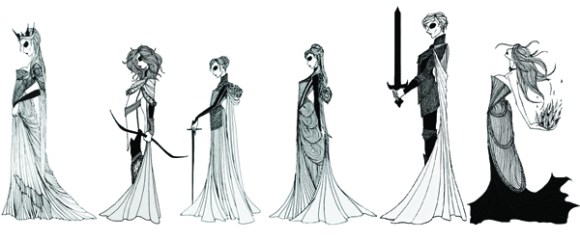
For their part, whether you love to hate them, or hate to love them (because they will undoubtedly be sacrificed in the next chapter), the women of ASOIAF are wonderful, fully fleshed-out characters, each with her own skills, desires, and motivations. Each is compelling in her own unique way, and instead of writing an ode to every character individually, I thought I’d wax poetic about the collective greatness all in one sitting (or two).

(Note: It goes without saying that spoilers will abound, so make sure you’re up to date.)

aryaaaa

Thomas Humeau

Arya Stark

“Every pain is a lesson, and every lesson makes you better.”

As much as crowd-pleaser Arya is one of my personal favourites, her character could have very easily fallen into the Strong Female Character trap. Little, tough, and unfeminine, it was clear from very early on that Arya was never going to be the modest and well-bred lady. Very quickly, she had to learn how to survive outside of a castle’s walls, passing as a boy in order to move more freely through the countryside. She’s one of the more wish-fulfilling characters in the series, but thankfully, Arya has her limitations. As much as she’d love to be a no-holds-barred, sword-swinging force of nature, she’s nine years old, has had little combat experience, and is physically very small. When she gambles, she loses as often as she wins, and her growth as a character is the richer for it.

Arya shows the consequences of being on the front lines of so much death and bloodshed. Even as she flees to the free city of Braavos, her experiences change her. Though she makes the best of it, it takes a certain kind of damaged human being to begin training as a Faceless Man, a religious order of assassins with the ability to change their appearance. She begins to sublimate her entire identity (an identity that the violence of Westeros has forced her to reinvent more than once) to become a honed killer. Arya is the tomboy, but without the innocence that makes tomboys seem unthreatening. The little lady she was taught to be would not have survived, so Arya became someone different, someone who, with a little more training, will be very fearsome indeed.

sweetsansa

Hannah Alexander

Sansa Stark

“My skin has turned to porcelain, to ivory, to steel.”

“Their dreams were full of songs and stories, the way hers had been before Joffrey cut her father’s head off. Sansa pitied them. Sansa envied them.”

Sansa Stark begins the series as a naïve, spoiled brat who lies and aligns herself with Monster King Joffrey in a vain attempt at a fairytale ending. At the start, she’s untrustworthy and unsympathetic, but that doesn’t last for long.

How do you know Sansa’s a badass? She’s still alive. What eleven-year-old realistically has the self-possession to navigate the Lannister minefield of King’s Landing? One who’s clever, intuitive, and can sense threats better than most adults. Sansa is magnificent, but because her weapons of choice are kindness and courtesy, her strength is so often overlooked.

She’s grown up listening to tales of brave, virtuous men who would take care of her, of tournaments and beauty and courtly love. She drank the misogynistic Kool-Aid in a big way (as a child is wont to do) and, after the death of her father, her awakening is understandably rude. But she so very quickly learns to manage, to survive, to fend for herself in an environment that is just as perilous as the one her sister Arya is facing, and she does it much more successfully than her father ever did. So yes, Sansa is a girl. She’s even a girly girl. She loves dresses and lemon cakes and sweet smelling things. But who exactly decided that was a bad thing, a weak thing?

girls_of_westeros___catelyn_by_martinacecilia-d568xh8

Martina Cecilia

Catelyn Stark

“You have courage. Not battle courage perhaps but… I don’t know… a kind of woman’s courage.”

Clear-headed and intelligent, Catelyn stands out as the character who is most consistently aware of the political clime in which she operates. Whether counselling her husband or her son, she offers solid advice based on her experience and resourcefulness, advice that, due to her very conservative roles of wife and mother, often go unheeded. Her son Robb’s dealings with both Theon Greyjoy and Walder Frey would have been vastly different if he lived in a world that hadn’t taught him to consider taking his mother’s advice a sign of weakness. Eddard Stark could very well still be among the living if he’d spent a little more time considering his wife’s point of view.

Despite knowing what the repercussions of her actions will be, she is fiercely committed to the safety of her children, and that in itself is bravery. Time and time again she displays a single-mindedness that, once she is brought back to life and adopts the mantle of Lady Stoneheart, becomes obsessive and potentially destructive. But it is Catelyn’s imperfections that make her so human. Being a devoted mother doesn’t immediately sweep away whatever pettiness and prejudice she may have (and nowhere is that more clear than in her treatment of John Snow). And wanting the best for her children, not to mention vengeance when she believes them all lost to her, blinds her otherwise good judgement. In a perfect world, Catelyn would have been able to protect her brood, but even an undead leader of a band of outlaws can’t anticipate how cruel and unyielding Westeros can be.

hearmeroar

Azim al Ghussein

Cersei Lannister

“Tears, the woman’s weapon, my lady mother used to call them. The man’s weapon is a sword. And that tells us all you need to know, doesn’t it?”

“She had played the dutiful daughter, the blushing bride, the pliant wife… all the while promising herself that one day it would be her turn.”

Let’s be real, Cersei Lannister is fun to hate. Selfish and greedy, perhaps her only redeeming quality is the loyalty she feels for her family. When grasping ambition is coupled with a complete disregard for the welfare of others, you’ve got the makings of a spectacular villain.

For Cersei’s whole life, she’s been taught that her value lies in her youth and beauty, and it’s telling that its in her middle age that she begins to push for something more tangible. She’s fearless, she’s bold, she’s recalcitrant. She’s been denied the true power she thinks she deserves (and she’s right to say she’s her father’s most suitable heir) and it’s made her bitter, resentful, and reckless. And not being able to command true respect has made her unable to know when enough is enough. She’s totally unprepared for the demands of the throne. Coupled with her grief over her family dropping like flies and her growing alcoholism, once she gets her hands on the Iron Throne she becomes a paranoid, ruthless monarch who’s going to alienate the very allies she needs. When, invariably, her kingdoms do fall into ruin, Cersei’s comeuppance is sweet.

True to ASOIAF fashion, Cersei only becomes a point-of view-character once she is no longer the perfect, golden queen, once she has been thoroughly defeated (or so her enemies think). But even time in jail, a naked-and-shorn walk of shame through the city streets, and an impending trial-by-combat can’t cow the lioness.

olenna_redwyne_by_duhi-d5axkie

Duhita Das

Olenna Tyrell

“All these kings would do a deal better if they put down their swords and listened to their mothers.”

“‘Grandmother, why do they call you the Queen of Thorns?’ The old woman patted her on the cheek. ‘My dear girl,’ she said, ‘what else is left after the roses fall?'”

Though definitely not a primary character, Olenna Tyrell steals every scene the minute she crops up in A Storm of Swords. Clever, sarcastic, and utterly unafraid, it doesn’t take long for the Tyrell matriarch to establish herself as the character to beat when it comes to political machinations or verbal sparring. You aren’t just given “the Queen of Thorns” as a nickname. You have to earn it.

Her family is powerful, wealthy, and has consistently backed the Lannisters into a corner, a fact of which Olenna is perfectly aware. In the later books, there isn’t one King’s Landing plot that, seemingly, doesn’t involve the Tyrells, and under the guidance of Olenna, the family isn’t shy about exerting its considerable influence.

The Tyrells also stand apart for their network of female relationships. Headed by Olenna, there always seem to be several Tyrell nieces and friends there for solidarity. It’s one of the loveliest support systems in the series, and one that is in place due to the respect commanded by the Queen of Thorns. Olenna is too old to waste time and equivocate, and for her no-nonsense attitude, she’s perhaps the most enjoyable character in all the seven kingdoms. (Plus, she is potentially Joffrey’s killer, and that in itself is enough to earn her my undying devotion.)

Tagged , , , , , , , , , , , , , , , , , , , , , , ,

With this ring: Why I love Saga so much

alanaandmarkosittinginatree

All it takes is a quick perusal of this blog to know that I want more diversity in the relationships that play out in our books and on our screens. I want queer relationships, ace relationships, poly relationships, strong and long-lasting friendships, family relationships, and all the different and wonderful permutations in between.

I want more than just your typical boy-meets-girl love story, both because there’s so much more out there, and because, honestly, heterosexual romantic relationships are kind of old hat by now. I know a love story is supposed to be eternal, but at some point, haven’t we explored all the nuances and subtleties of this particular kind of interaction? What’s left to talk about?

But here’s the thing: We actually do need to see more romantic, hetero love stories, because whenever I see one that’s totally equitable, I’m still surprised. We need love where the woman is an active participant, where the man isn’t automatically the decision-maker, where both partners have personalities outside of their relationship, and tired, gendered stereotypes aren’t played out ad nauseum. And that’s where Saga comes in.

The story, by Brian K. Vaughan and Fiona Staples for Image Comics, is as strange as it is delightful. To wit: There are outsourced wars, ghost babysitters, television sex scenes (that’s sex between televisions), a wooden spaceship, an infant narrator, and Lying Cat, my new favourite sidekick. But what really sets it apart is the relationship between protagonists Alana and Marko.

Their relationship is one of complete equals. She’s the one who broke him out of jail. He’s the pacifist. They’re both ex-military on the run from their home worlds, trying to start a family. They’re both incredibly capable, and bring tangible assets to the relationship. A relationship that, let’s be honest, needs all the help it can get.

hrrnk

Normally I wouldn’t spend time championing a relationship that fits so nicely into the conservative, domestic idea of wedding-and-a-baby, not because there’s anything inherently wrong with it, but because there are more than enough people placing tremendous value on those particular milestones already. But when I try to think of straight couples who are evenly matched in terms of their usefulness to the story, the list is awfully short (in fact, off the top of my head, it’s basically just Zoe and Wash). We need more power couples challenging our preconceived ideas about heterosexual relationships. We need more Alanas and Markos.

lifetakersheartbreakers

Tagged , , , , , , ,

+1 to Diplomacy: Pronouns in RPG Manuals

tumblr_mwmpfc08OS1rz6qqno1_1280

I unfortunately will have to keep this week’s post short, because these last few days I’ve been pretty busy working. (In this case “working” is code for “starting a D&D campaign, creating my new character, and boning up on the backstory.”) (Oh, and my character is a Dragonborn fighter, nbd.) Despite my preoccupation, I did want to write a quick word about the game manuals I’ve had my nose stuck in for the past few days.

It may be because I spend the overwhelming majority of my time with words, but I always notice how the manuals themselves are written. Are they clear and easy to understand? Does the prose really need to be that purple? And, often, what pronouns are they using?

Most might not find that last question particularly compelling, but it’s something I always seem to focus on. Though my (admittedly recent) experiences with table top role playing games have been overwhelmingly positive, it’s not lost on me that that was never a guarantee. So when I’m scouring page after page, trying to figure out exactly how I’m going to deal with an oncoming horde of yetis, I notice when examples use “she” or even “he or she” to identify the player. (Fun fact: “Yeti” is derived from the Tibetan word for “rock bear.” The more you know.)

It’s a small gesture, but in an area of geekdom that still skews so heavily male, it means the world to feel included in such an official way, to feel like you really belong at the table, so to speak. And I’m definitely not the only one who values the inclusion of women in game literature. Over at Bitch, Lillian Cohen-Moore writes about how White Wolf Publishing made her feel like a legitimate part of their world in her great series Save vs. Sexism:

“I started to actually read the games put out by White Wolf a few years later, when I was 12, [and] being given a game book to read was a big deal for me. I was playing in an environment that trusted me to be mature, to ask questions, and to study up on my own. I quickly grew to feel that it was okay to be a girl and play White Wolf games. As an adult, I have a vocabulary for why I had that feeling… White Wolf books have women in their examples.”

The manuals I’ve come across haven’t been perfect, and I do wish they wouldn’t depend so heavily on such a strict gender binary, but I’ve got to give credit where credit is due. For normalizing my presence, for not making me out to be the exception rather than the rule, I’d like to offer D&D publisher Wizards of the Coast some heartfelt congratulations.

Top image from Image Comics’ Rat Queens.

Tagged , , , , , , ,

Rubber Spine Syndrome: A message on RSS prevention

Eschergirls1

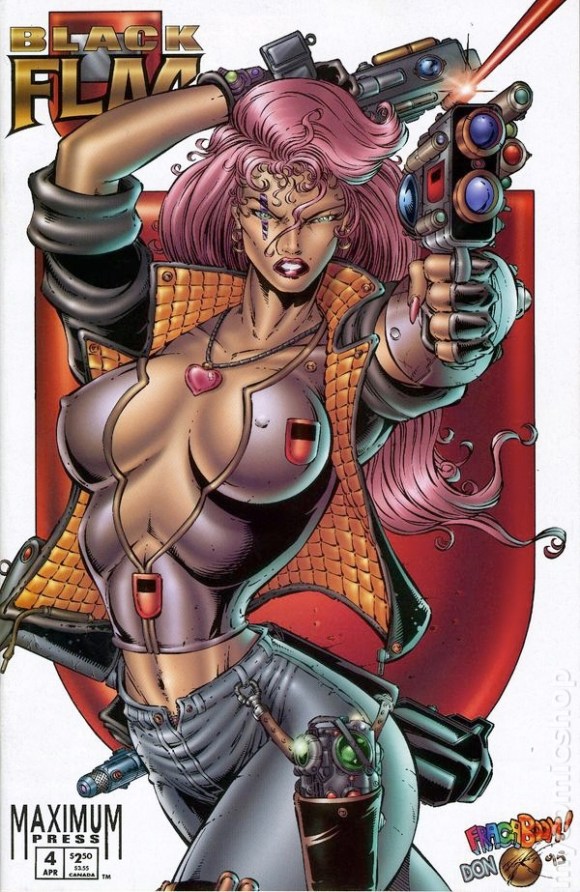
I just spent a little while trawling Escher Girls—which is never a great idea unless I’m trying to whip myself into a Righteous Feminist Fury™—and I’m writing this out of genuine worry for the video game/comic book/anime women who seem to be missing a major chunk of their skeleton. I don’t know if you’ve noticed, but there are a significant number of women walking around without a spine.

Now this is clearly an oversight of epidemic proportions, so here’s my public service announcement:

GIVE YOUR CHARACTERS SPINES.

THEY NEED SPINES.

REALLY, THEY DO.

eschergirls2

Call it what you want—Escher Girls, The Brokeback, Rubber Spine, the list goes on—but it’s totally disconcerting that so many artists, working in so many genres, are willing to break any and all rules of proportion and perspective in a ham-fisted attempt at getting both breasts and butts in the shot. Some of these illustrations (and presented below is a tiny random sample) defy everything we know about anatomy, gravity, and bone density.

Now, I would never try to infringe on anyone’s artistic vision, but if you find yourself incapable of drawing women realistically and in ways that don’t reduce them to an awkwardly-assembled collection of sexy parts, I reserve the right to call you out on it. It’s bad art, and I expect better.

eschergirls3

I expect Black Widow to know how to take off her shoes properly (in this context “properly” means “in a way that doesn’t give me sympathy hip pain”).

eschergirls4

I expect X23 to actually be X23 and not, say, Elastigirl.

eschergirls5

I expect racist caricatures with missing left feet not to be running around New York City, posing for invisible cameras. (Seriously, what even is this.)

eschergirls6

I expect this illustration to be some sort of terrifying, Exorcist-type rotating torso, not a sexy pinup.

eschergirls7

I expect a warrior who presumably battles dragons to have a better way of dealing with hemorrhoids.

These are understandably not genres that hew too closely to realism, but the ways in which the fantasy manifests is deeply misogynistic. There’s no reason for any of these women to be contorted like this. Many of these characters (though I’m admittedly not familiar with all of them) are really fantastic, and deserve better than to be twisted and moulded into grotesque approximations of some arbitrary “sexy” template.

They’re heroes, and it’s not fair to render them literally spineless.

All images from Escher Girls.

Tagged , , , , , , , , ,

The portal to my heart

CHELL

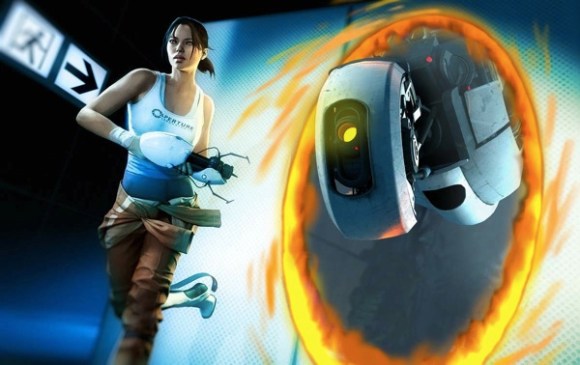
I’m almost ashamed to admit it, but I haven’t yet finished Portal 2. (Why yes, I am aware of its release date). In fact, I only managed to get to the end of the original Portal five years after it came out. But despite my chronic tardiness when it comes to video games, the franchise rapidly became one of my all time favourites. And so, in honour of my joining the ranks of those who play games on time like normal people, I’d like to revisit one of the most powerful moments I’ve ever experienced in game: The time I realized the disembodied hand holding my Portal gun belonged to a woman.

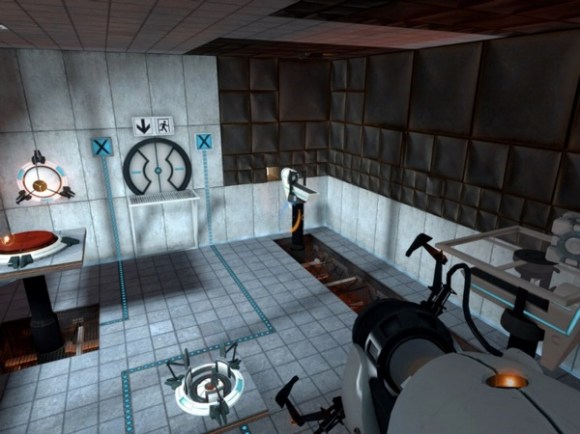
For those unfamiliar with the Portal franchise, the premise is simple. You play as a silent, orange jumpsuit-clad figure who, when furnished with a gun that creates portals in walls, must act as a lab rat, going through testing facilities and solving puzzles as if it were a labyrinth with a hunk of cheese at the end (except the cheese is cake and the cake is a lie) (play the game, you’ll get it). You can create two types of portals, an entrance and an exit, and these allow you to reach high platforms, evade obstacles (fun things like acid rivers and killer robots), and slingshot yourself across far distances, all in an effort to open the next door.

You know nothing about yourself, your backstory is unimportant. All that matters is surviving long enough to get to the next test. Your only contact with the outside world is GladOS, a chilling voice that alternately encourages you and informs you that you will never succeed. Who you are is the least of your worries. So when I happened to catch sight of myself through a conveniently placed portal, I was shocked to find out that I was actually a woman.

I was shocked because I didn’t need to be a woman. There was nothing in the story that necessitated that. I wasn’t the girlfriend of some rugged hero. I didn’t have to save my children. I wasn’t a well-known character from an already established franchise or the female equivalent of a famous male character. I just had a gun and solved puzzles.

POV

This is basically all you see of yourself.

Video games tend to treat white, straight, cisgendered men as the default human being, a template that has mass appeal. If something happens to this benchmark human, everyone can identify with it, the story can reach more people. Conventional wisdom would have us believe that the more you add on to your default—be it race, gender, queerness—the more specific the experience, and the less universal your story. Though video games are not the only medium in which this happens, it’s insulting to think that white people could not possible identify with a protagonist of colour, that men could not identify with a woman, that any variation from the status quo makes the story less capable of speaking a capital-T truth. And this belief has real-world consequences. Despite the fact that women make up a huge percentage of video game players and purchasers, we’re still struggling to have any substantial representation in the genre. It’s telling that when I only saw a gun, it didn’t even cross my mind that the hand holding it could belong to anyone but a big, chiseled man.

When I saw the protagonist (whose name is Chell, though that information isn’t made available in the game itself), I felt real joy. It meant something so profound that this person, this person so like me, could be worthy of having her story told. I paused the game for a few full seconds, processing how deeply this realization had affected me. It may seem like a strong reaction, but the effect of never seeing yourself reflected back at you is feeling like you don’t belong, like you’re not deserving. In this one game, I was getting a different message.

I already liked Portal. The puzzles were challenging and got incrementally harder in such a way that I felt like I was improving at a good pace. The tone reminded me of Vincenzo Natali’s Cube trilogy (which I highly recommend if dark, independent, Canadian science fiction is at all something that might interest you). The controls, after an initial learning curve, were easy to use and very smooth. Portal (not to mention its sequel) is a very good game. The franchise has been remarkably successful, and has managed to do so without sexualizing its protagonist (apart from a few ill-advised fat jokes, courtesy of GladOS in Portal 2). In one fell swoop, Portal has shown that yes, we can have our cake and eat it too.

Quintus-Cassius-chell-glados-valve-portal-fan-art-aperture-lab-laboratories-cube

“Aperture lab,” by QuintusCassius.

Tagged , , , ,

Queering the Star Trek Universe

GayStarfleetAlliance

In 1966, a television show named Star Trek was first aired. The show, which followed the adventures of Captain Kirk and his crew aboard the starship Enterprise, was set in a utopian 23rd Century, a time when disease and poverty had been conquered, hunger was eradicated, and currency was useless. A time when humanity had done away with racism and sexism, and worked only to explore the galaxy and better itself.

Created by Gene Roddenberry, the original series (though problematic by today’s standards) was groundbreaking in its inclusion of both women and actors of colour who occupied highly placed and highly visible positions aboard the Enterprise. This diversity made the show much more than just another flashy, over-the-top space opera, and was directly responsible for the show’s success, a success that brought about four more television series, and a plethora of movies, novels, video games, and comics.

Star Trek was always unabashedly hopeful. By the time the first three sequels—Next GenerationVoyager, and Deep Space 9—take place, Earth has already spent 200 years without poverty and starvation. The shows represented the idea that whatever was thrown at humanity, we would triumph and persevere. It’s a theme that seems almost embarrassingly earnest given the darker, more dystopian tone of contemporary science fiction, but it’s a message that struck a chord with the original audience, and continues to do so enough to merit revisiting the world again and again. Roddenberry, in a 1973 speech, says it himself: “The whole show was an attempt to say that humanity will reach maturity and wisdom on the day that it begins not just to tolerate, but to take a special delight in differences in ideas and differences in life forms.”

But it’s because of Star Trek’s commitment to progress that one glaring omission stands out: there has never been a queer character in any of the shows. According to Star Trek lore, as a species, we have undergone a third world war, human genetic modification run amok, and a nuclear holocaust, and we’ve come out stronger for it. Are we really then still so heteronormative? In this hard-earned utopia, is there really no room for anything but straightness?

Two generations and not a whole lot of progress

Though it would have been almost unheard of to include visible queerness in the 1960s Original Series, according to George Takei (who played Lieutenant Hikaru Sulu and has since become a staunch queer rights activist), Roddenberry did want to address the issue. He didn’t, ostensibly because of the show’s precarious, about-to-be-canceled position. But in 1987, right before the beginning of The Next Generation, Roddenberry said at a convention that “we should probably have a gay character.” The first four seasons went by, however, without much of anything. Ship doctor Beverly Crusher rejected a lover once his consciousness had been transferred to a female body (in season four’s “The Host”), and that was basically it.

toogoodforyou

Your loss, Beverly.

There was a lovely little season three moment where Whoopi Goldberg changed one of her lines from “when a man and woman love each other” to “when two people love each other,” but when Goldberg also tried to get a queer couple sitting together in the background, the production team intervened.

Roddenberry remade his promise in 1991, telling The Advocate that season five of TNG would bring a gay character. He unfortunately died before the start of that season, and instead of a recurring queer cast member, we got the episode “The Outcast,” in which Riker falls in love with Soren, a member of the androgynous J’naii, who, despite the stigmas of her culture, identifies as a woman. Since the J’naii are all played by women, the effect is such that it seems like adorable, feminine Soren is being victimized by a group of dangerous, man-hating butch women. Not exactly the inclusive message that was intended to pacify an audience clamouring for more diversity (an audience that in the end resented the use of metaphor that cloaked their reality). It bears mentioning that Jonathan Frakes, who played Riker, thought the episode was too safe and tried to get a man cast as Soren, but was ultimately shot down.

ughughugh

“Our hetero love cannot be!”

Many fans blame Roddenberry’s heir Rick Berman, and it’s true that under his watch, the series never featured any explicitly queer characters, even while contemporaries like Will & Grace were making huge steps in terms of representation. TNG could have been at the forefront, had a proposed episode called “Blood and Fire” been made. The episode contained a pretty stark metaphor for AIDS paranoia—in the form of the incurable Regulan blood worms—and a veiled, passing reference to two crewmen having been together since the academy. But even that small nod was too much, and “Blood and Fire” now only exists as a fan-made film.

The subtext that never became text

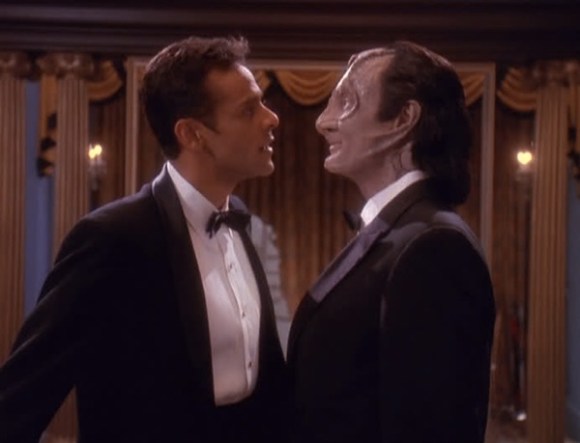
Over on Deep Space Nine, the track record for queer representation was a little better. A Cardassian character named Elim Garak was introduced early on and, well, I’ll let actor Andrew Robinson explain what happened:

“I started out playing Garak as someone who doesn’t have a defined sexuality. He’s not gay, he’s not straight, it’s a non-issue for him. Basically his sexuality is inclusive. But—it’s Star Trek and there were a couple of things working against that. One is that Americans really are very nervous about sexual ambiguity. Also, this is a family show, they have to keep it on the ‘straight and narrow,’ so then I backed off from it. Originally, in that very first episode, I loved the man’s absolute fearlessness about presenting himself to an attractive human being. The fact that the attractive human being is a man (Bashir) doesn’t make any difference to him, but that was a little too sophisticated I think. For the most part, the writers supported the character beautifully, but in that area they just made a choice they didn’t want to go there, and if they don’t want to go there I can’t, because the writing doesn’t support it.”

Nothing ended up happening between Garak and doctor Julian Bashir, though that certainly didn’t stop the audience from wanting it to.

ughsocute

I DIE.

The next almost-moment came in 1995, with the DS9 episode “Rejoined.” The introduction of the Trill species represented a turning point, and Lieutenant Commander Jadzia Dax in particular had a view of gender and sexuality that was more fluid, and obliquely queer, than most other characters. Jadzia was joined with the Dax symbiont, a slug-like life form that, when combined with a Trill host, created a whole new individual who nevertheless was in possession of the memories of each previous host. Because of this, Jadzia remembered living as both a man and woman. In the episode, it is heavily discouraged that a current host for the symbiont have anything to do with the significant others of past hosts, but Jadzia meets Lenara Khan, another joined Trill who remembers Dax as her husband. The two are drawn to one another, and even share a kiss, but in the end choose to give in to the expectations of their people, and never see each other again. Jadzia goes back to dating men exclusively.

eeeeeeeeeeeeeeeeeeeeeeeeee

Why anyone thought this should only be a one time thing is beyond me.

“But wait a minute,” you might be thinking. “There were a lot more instances of queerness in Deep Space Nine.” And that is true. When a Ferengi woman disguised as a man admits to having feelings for bar owner Quark, Jadzia takes it in stride before knowing about her true identity (“Profit and Lace”). Constable Odo, as a shapeshifter or “changeling,” is only superficially male, though there is never any exploring of gender, and his only relationship is with a woman.

“But no,” I can hear you saying. “There was that whole mirror universe. Everyone was queer there.” And here’s where things get tricky. In the Star Trek world, there is a mirror universe where everyone is evil and historical events have happened in radically different ways (yes, it’s basically as lame as it sounds). First introduced in the Original Series, the universe is revisited in four separate DS9 episodes. The evil versions of two characters, Kira Nerys and Ezri Dax, show a marked interest in women, but it’s precisely because they’re the evil bisexual versions of two good and straight characters that I don’t count them as particularly positive examples of queer representation. They both feed directly into the sly, untrustworthy bisexual stereotype (a trope from which even ex-spy/potential war criminal Garak isn’t exempt).

None of the characters who ever express queer desire are human, and despite the indirect little mentions that peppered the different series, none of the television shows ever had a long-standing character that was textually anything less than one hundred percent heterosexual.

Boldly going forward

So what happens now? Well it isn’t too late to inject the Star Trek universe with some much-needed diversity, and this isn’t exactly a new request. In 2001, shortly before Enterprise premiered, Salon published a piece that wondered whether there would finally be a queer character. Twelve years later, Wired asked the same question, this time of the upcoming film Star Trek: Into Darkness.

At least according to Enterprise showrunner (and former TNG intern) Brannon Braga, the lack of casually queer characters was a real missed opportunity, and one that he doesn’t think would be replicated today:

“There was a constant back and forth about well how do we portray the spectrum of sexuality. There were people who felt very strongly that we should be showing casually, you know, just two guys together in the background in Ten Forward. At the time the decision was made not to do that and I think those same people would make a different decision now because I think, you know, that was 1989, well yeah about 89, 90, 91. I have no doubt that those same creative players wouldn’t feel so hesitant to have, you know, have been squeamish about a decision like that.”

But still, the J. J. Abrams rebooted movies haven’t exactly delivered in this respect, despite the fact that we’re in 2013 and this shouldn’t still be an issue. There has, however, been talk of a new television series, which could provide more opportunities to repair past mistakes.

For now, any mention of queer love between Starfleet officers will have to remain in the realms of fan fiction. There you can spend a lifetime reading all the Janeway/Seven stories that have been written, and enjoy the fact that the Spock/Kirk relationship was so popular and so central to people’s understanding of the characters that Star Trek novel publisher Pocket Books felt the need to explicitly state that they were “not interested in books that suggest anything other than friendship between Kirk and Spock” in their submission guidelines. We may still be waiting, but boy are we ready.

allthefeels

All screencaps via trekcore.

Tagged , , , , , , , , , , , , , , , , , , , , , , , , , , , , , , , , , ,

Why I’m not totally on board with Eir, even though I wish I was

Eir_02_concept_art

As part of my continuing effort to be the biggest Guild Wars 2 fangirl, I’d like to talk a bit about Eir Stegalkin, a Norn character featured prominently in the game.

First a bit of backstory: Eir is a Norn ranger, tactician, and sculptor who travels the world with her wolf, Garm. She’s known for her shrewd fighting ability, and she was once the leader of Destiny’s Edge, a group of warriors dedicated to protecting Tyria and fighting the elder dragons. (A group I’m admittedly not all that familiar with because I’m trying to steer clear of spoilers for the time being.) She’s named after a Norse goddess (and sometimes valkyrie) associated with medical skill, and through her involvement with Destiny’s Edge, she’s considered a living legend and proof positive that the five races of Tyria can work together for the common good.

Wander around Hoelbrak and you’ll hear little Norn girls tell each other how much they want to be like Eir when they grow up. She’s been a big part of my personal story so far, and I really enjoy every quest and cut scene we have together. Given all of this, it’s a shame that there’s one thing about Eir I’m really not into: Her outfit.

Now, before I start, let me acknowledge that her clothes at the very least make sense, given her character (you’d be surprised at how often that’s not the case). She’s Norn, so the cold doesn’t really bother her, and I’ll be honest, if I had badass tattoos like that all down my side, I’d probably want to show them off too. It also bears mentioning that her outfit is at least held together with straps instead of looking painted or vacuum sealed on. (It’s depressing that my bar is so low.) If Eir had been created in a vacuum, I’d have no problem with her whatsoever. But, unfortunately, she exists in a larger context of women in video games, and her outfit strays just a little too close to chain mail bikini territory for my liking.

Anyone who plays any sort of video game is familiar with the teeny tiny outfits female characters are so often forced to wear, and for a quick refresher, head on over to the Repair Her Armor tumblr, where there’s a great illustrated roundup of common costume types found in MMOs. In fact, it’s enough of a problem that there are several blogs dedicated solely to showing how representations of women are ridiculously hypersexualized in games and comics.

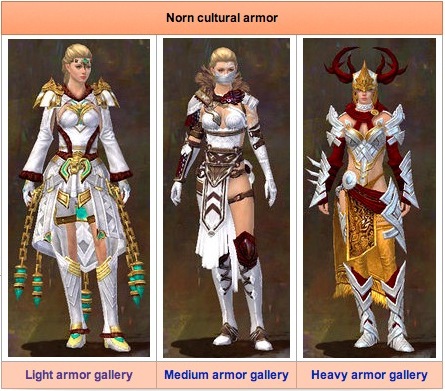
Norn cultural armour

For reference, this is the type of armour Eir wears. I’m still trying to figure out why the “heavy” class is more revealing.

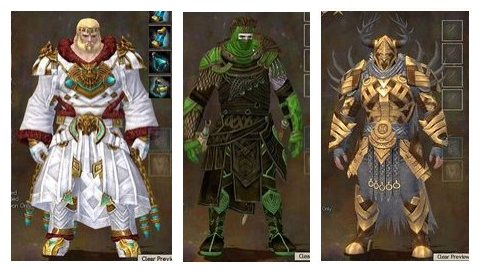
male armour

And here’s the equivalent male armour.

There’s no real reason to have Eir look sexy. She’s well-known, she commands respect (though it’s been awhile since she’s gained any sort of personal glory, a big no no for the Norn), and she doesn’t ever seem to play up her sexuality. And yes, she’s a ranger, so she’s most likely not a melee fighter and won’t be doing a whole lot of close-up fighting. But that doesn’t really excuse having half her body exposed (this isn’t just her “street” wear, it’s for combat too). Arrows and spears and all manner of other weapons can cause damage even if you’re keeping a safe distance and have a 5-foot wolf watching your back. And regardless of Eir’s tolerance of the cold, having someone show skin in the snow makes that skin more pronounced. The contrast is jarring, and I can’t help but think that the shock value detracts from the character.

(Side note, and this one is a pet peeve of mine: Having armour sitting right up against your sternum like that is a great way to puncture a lung and die.)

Are there worse examples out there? Oh my god, absolutely. Am I saying that no one should ever look sexy? Of course not. But I would like to see some more variety in how women are portrayed. I wish sexiness wasn’t a necessity, a baseline characteristic all female characters must meet. And honestly, when we’re dealing with someone as impressive as Eir, someone who’s saved the world many times over, it doesn’t seem like so much to ask.

If you’re interested in seeing beautiful, combat-ready armour, womenfighters.tumblr.com has some great character designs.

Tagged , , , , , , , , , ,

Upcoming Disney movie leaves me chilled

tumblr_mfi8rcEUCB1qbjel9o1_1280

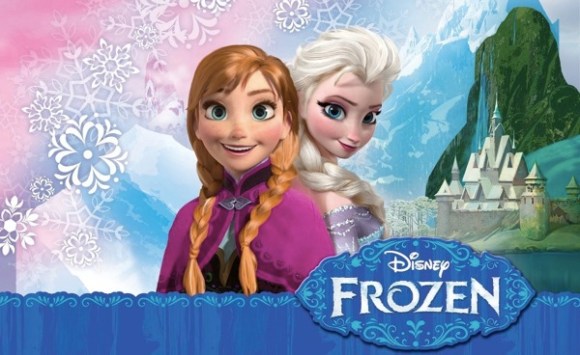
Disney’s Frozen, their take on the Hans Christian Andersen tale “The Snow Queen,” will probably be disappointing. Don’t get me wrong, there’s plenty to love about it. It’s a movie with a female lead, and at least one other major female character. There’s an all star cast that includes Kristen Bell, Alan Tudyk, and Idina Menzell. It’s set in an unnamed Nordic country, which is something we’ve never seen before, and, in an interview with MTV Geek, Bell, who voices the protagonist, says she “made this girl much more relatable and weirder and scrappier” than previous female Disney leads. All of this is great.

But here’s some context: the original story follows Gerda, a girl who goes on a cold journey to rescue her (male) friend Kai from the titular Ice Queen. It’s a pretty great reversal of the damsel in distress narrative but, so far, it looks like the movie, out this November, will have nothing to do with the original tale. Not only is Gerda (now named Anna) saving her sister, who is the Ice Queen, she’s also not making the trip solo. This time, she’ll be accompanied by Kristoff, a mountain man. Kristoff, incidentally, is one of two male characters who are almost sure to act as romantic interests.

Hanna White over at Bitch gives a pretty good explanation of why these changes are so worrisome:

“It’s disappointing to see a story that was originally about a deeply independent and brave young woman on a rescue mission turned into a romance, as it inevitably will be. No one at Disney has inferred that a romantic relationship between Anna and Kristoff will be part of the movie, but romantic love is central to almost every Disney princess’s story—and besides, why else add the character of Kristoff in the first place? Even if they don’t fall in love, and he merely acts as Anna’s guide, the fact that she needs one at all reproduces stereotypes about female weakness and the need for a strong male helper that the original narrative of ‘The Snow Queen’ bucks.”

The presence of deeply entrenched gender norms, however, isn’t this film’s only potential failing. Once again, the “princess” (and they always seem to end up being princesses regardless of actual royal affiliation) will be white. Keep in mind that Frozen will be set in an area of the world that is home to many indigenous cultures, among them the Inuit and the Sami. In fact, Mike Gaimo, the film’s art director, directly says that one of his many inspirations for the film was the Sami people. Aside from the fact that it’s extraordinarily disrespectful to lump an entire culture into a listicle that features such points of interest as “castles” and “snow,” it seems strange that the Sami would inspire a world that, so far, seems entirely populated by white characters.

Disney-Frozen-official

Their whiteness is so blinding it’s making her cross-eyed.

This is a huge missed opportunity for Disney who, besides the fact that they’ve basically made a carbon-copy of Rapunzel, seem fiercely committed to having as few princesses of colour as possible. This hasn’t gone unnoticed by fans, and among quite a lot of backlash, a tumblr named Snow Queens and PoC has taken on the task of reimagining what the movie might have looked like had a woman of colour been chosen. The tumblr—often featuring a protagonist who is either Inuit or Sami, but also sometimes Mongolian or Kazakh, among others—features some great art, but has also managed to start a conversation around the film, and about Disney’s overall track record. I can’t help thinking that any of the proposed character designs would make for a more creative and compelling film, and with so many amazing alternatives available, it’s hard to warm up to the story that Disney is actually proposing.

Top image by Rah at weepingrockrock.tumblr.com, via Snow Queens and PoC.

P.S. Get used to the pun in the title, puns are here to stay.

Tagged , , , , , , , , , ,

Welcome!

tumblr_mr0iay1Tdu1sbz2ewo5_1280Welcome to the inaugural post for Unfridged, a website dedicated to looking at geek culture through a feminist lens.

My name is Alyssa Favreau and this blog is something that I have been wanting to do for a long time. I originally proposed it as a vlogging series for Geek & Sundry’s new channel, and despite not getting chosen, I can’t seem to stop thinking about all the topics I’d like to write about.

So what will you be able to find here? Well, for starters, I plan on including rundowns of my favourite characters, discussions about the misogynistic tropes that I see repeated over and over again, updates about all the fandoms that I can’t get enough of, and interviews with amazing creators. I can hardly wait to get started.

Please visit again soon!